
 Bhutto's now dead, shot in the back of the head by one or more assassins at close range, plus the effects of a suicide bombing that killed two dozen or more and wounded many others tightly packed around her. It happened in Rawalpindi, "no ordinary city" as Michel Chossudovsky explains. It's the home of Pakistan's military, its CIA-linked ISI, and is the country's de facto seat of power.
Chossudovsky adds: "Ironically Bhutto was assassinated in an urban area tightly controlled and guarded by the military police and the country's elite forces."
Rawalpindi and the country's capital, Islamabad, are sister cities, nine miles apart. They swarm with intelligence operatives including from CIA, and Chussodovsky stresses that Bhutto's assassination "was (no) haphazard event." Blaming Al-Queda misses the point, but that's how these schemes work. They're also clearer when convincing video is broadcast as UK's Channel 4 did on December 30. It debunked the official story and exposed Musharraf as a liar - that Bhutto died from a fractured skull "when she was thrown by the force of the (explosion's) shock wave (and) one of the levers of (her car's) sunroof hit her."
 The video contradicts this. It shows a clean-shaven man in sunglasses watching close by with a concealed gun and the suspected suicide bomber behind him dressed in white. The gunman then approaches Bhutto's car and at point blank range fires three shots. Immediately after, the suicide bomber detonates his device, killing and wounding dozens nearby.
The question then is - not who killed her, but who ordered her killed and who profits from it? Musharraf quickly named the usual suspect - Al-Queda but ignored what William Engdahl observed in his January 4 Global Research article called "Bhutto's Assassination: Who Gains?" He notes how well protected political leaders are so it's no simple task killing them. "It requires agencies of professional intelligence training to insure the job is done" right, and no one can reveal who ordered it or the motive.
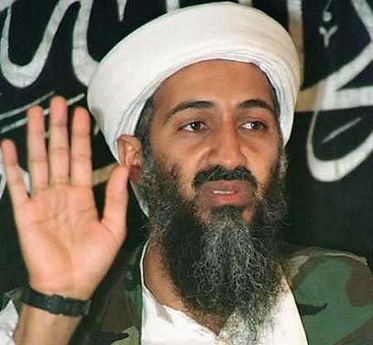
Engdahl also states that naming Al-Queda serves Musharraf and Washington. It increases public fear, revs up the "war on terror," and provides justification for it to continue. It also reinforces the Al-Queda myth as well as "enemy number one" bin Laden, and ignores the evidence that the CIA created both in the 1980s for the war against the Soviets in Afghanistan. It's just as silent on the possibility bin Laden is dead, killed (as Bhutto told David Frost last fall) by Omar Sheikh whom the London Sunday Times called "no ordinary terrorist but a man who has connections that reach high into Pakistan's military and intelligence elite and into the innermost circles" of bin Laden and Al-Queda.
If true, a dead bin Laden disrupts Washington's national security doctrine that needs enemies to scare the public, eliminates "enemy number one" as the main one, and exposes strategically released bin Laden tapes as made-in-Washington frauds. Today, we're told that bin Laden-led Islamic terrorists endanger the West, but at the same time we use them for imperial gain as we did against the Soviets, in the Balkans and now do in Iraq, Iran, Afghanistan and elsewhere. If Al-Queda operatives killed Bhutto, it means Pakistan's ISI and CIA were involved, and what's more likely than that. Forget a lone gunman theory, a lose cannon terrorist or a sole anti-Bhutto assassin. Consider "Cui bono," examine the evidence, and it points to Washington and Islamabad.
Today in Pakistan, intrigue abounds, and the country is destabilized as Michel Chossudovsky observes in his December 30 Global Research article called "The Destabilization of Pakistan." Assassinating Bhutto contributes to it, and Chossudovsky sees a US-sponsored "regime change" ahead. Musharraf is so weak and discredited "continuity under military rule is no long the main thrust of US foreign policy." Musharraf's regime "cannot prevail," and Washington's scheme is "to actively promote the political fragmentation and balkanization of Pakistan as a nation."
From it, a new political leadership will emerge that will be "compliant," have "no commitment to (Pakistan's) national interest," and will be subservient to "US imperial interests, while concurrently....weakening....the central government (and fracturing) Pakistan's fragile federal structure."
It makes perfect sense as part of Washington's broader Middle East-Central Asia agenda. Pakistan is a key frontline state, a "geopolitical hub," with a central role to play in the "Global War on Terrorism." It includes "balkanizing" the country Yugoslavia-style the way it's planned for Iraq, Afghanistan and Iran - a simple divide and conquer strategy. Chossudovsky adds: "Continuity, characterized by the dominant role of the Pakistani military and intelligence (that worked up to now) has been scrapped in favor of political breakup and balkanization." The scheme is to foment "social, ethnic and factional divisions and political fragmentation, including the territorial breakup" of the country.
 It's a common US strategy with covert intelligence support, and consider The New York Times article on January 6 called "US Considers New Covert Push Within Pakistan" to exploit Bhutto's death. It states that senior national security advisers (including Dick Cheney, Condoleezza Rice and Joint Chiefs Chairman Admiral Michael Mullen) may "expand the authority of the CIA and the military to conduct far more aggressive covert operations in the tribal areas of Pakistan" against Al-Queda and the Taliban to counteract their efforts and "destabilize the Pakistani government."
The article states that Musharraf and the military are on board, gives the usual boiler plate reasons, but omits what's really at stake even as it admits Musharraf is unpopular and a US intervention could "prompt a powerful popular backlash against" both countries.
Chussodovsky fills in the blanks and explains that US strategy aims to trigger "ethnic and religious strife," abet and finance "secessionist movements while also weakening" Musharraf's government. "The broader objective is to fracture the Nation State....redraw the borders of Iraq, Iran, Syria, Afghanistan and Pakistan" and replace Musharraf in the process. He's unpopular, damaged goods and has to go.
Bhutto was an unwitting part of the scheme but not the way she planned. She thought Washington needed here, and she was right - not as Prime Minister but as a martyr to destabilize the country and break it up if the plan works. It may as internal secessionist elements are strong, especially in energy rich (mostly gas) Balochistan province, and "indications" are they're supported by "Britain and the US." The idea is a "Greater Balochistan" by integrating Baloch areas with those in Iran and southern Afghanistan.
Chossudovsky explains that it was not "accidental that the 2005 National Intelligence Council-CIA report predicted a 'Yugoslav-like fate' for Pakistan" through internally and externally manufactured "economic mismanagment." Remember also that the country split before in 1971 when East Pakistan became Bangladesh following months of civil war and against India that took a million or more lives. Pakistanis may face that prospect again as US plans unfold.
Future Outlook Remains Uncertain
Big questions remain, and key ones are will breakup plans work, who'll emerge with enough popular support to lead it, and will the public go along. They've got no incentive to do it once anger over Bhutto's death subsides, and recent polling data show overwhelming public opposition to US or other foreign intervention that's very much part of the scheme. In the end, their views don't count, and it may happen anyway through political intrigue and Washington-led brute force.
Reports prior to Bhutto's assassination point that way. They suggest US Special and other forces already operate in Pakistan, and head of US Special Operations Command, Admiral Eric Olson, arranged with Musharraf and Pakistan's military last summer and fall to substantially increase their numbers early this year. Involved as well is what The New York Times reported in November that the "US Hopes to Use Pakistani Tribes Against Al Queda" in the country's "frontier areas."
The scheme is similar to the effort in Iraq's al-Anbar province with bribes and weapons to seal a deal apparently now finalized. US Central Command Commander Admiral William Fallon alluded to it in a recent Voice of America interview by saying we're ready to provide "training, assistance and mentoring based on our experience with insurgencies," but he left out the bribing part that's part of these deals.
Where this will lead is speculation, but consider a feature Wall Street Journal January 8 article. It's headlined "Bhutto Killing Roils Province, Spurring Calls to Quit Pakistan" and calls Bhutto's native Sindh province (second largest of Pakistan's four provinces) the "Latest Fault Line In a Fractured Country; Like Occupied Territory."
 Mourners filed past Bhutto's grave chanting "We don't want Pakistan," and in the wake of her death "Sindh has been swept by nationalist rage." Many in the province are "calling for outright independence," and support for separation has grown among rank and file PPP members. There's even talk of an "armed insurgency" as anger is directed against neighboring Punjab, the largest province, and home of the military, ISI and government.
The Journal quotes Qadir Magsi, head of the nationalist Sindh Taraqi Passand movement saying...."Bhutto was the last hope (for unity). Now this Pakistan must be broken up." The article continues saying what's happening in Sindh is already in play in the Northwest Frontier province where central government authority withered in recent years. In addition, Pakistan's Army has been embroiled in Baluchistan's insurgency for the past few years adding to overall instability. The theme of the Journal article is that calls for unity are falling on deaf ears, and one PPP veteran sums it up: "What we need is separation."
That suits Bush administration officials fine, they're likely stoking it, and one thing is clear. US forces are in the region to stay, and Washington under any administration (Democrat or Republican) intends to dominate this vital part of the world with its vast energy reserves. The strategy appears similar to the divide and conquer one in Yugoslavia. There it worked, but the Middle East and Central Asia aren't so simple. Stay tuned as events will likely accelerate, the media will highlight them, and it looks like stepped up conflict (and its fallout) is part of the plan.
**
Michel Chossudovsky is a professor of economics at the University of Ottawa.
Chossudovsky has taught as visiting professor at academic institutions in Western Europe, Latin America and Southeast Asia, has acted as economic adviser to governments of developing countries and has worked as a consultant for international organizations including the United Nations Development Programme (UNDP), the African Development Bank, the United Nations African Institute for Economic Development and Planning (AIEDEP), the United Nations Population Fund (UNFPA), the International Labour Organization (ILO), the World Health Organisation (WHO), the United Nations Economic Commission for Latin America and the Caribbean (ECLAC).


