
Showing posts with label Benazir Bhutto. Show all posts

Tuesday, January 15, 2008

Who Killed Bhutto and Why?

Stephen Lendman

Bhutto's now dead, shot in the back of the head by one or more assassins at close range, plus the effects of a suicide bombing that killed two dozen or more and wounded many others tightly packed around her. It happened in Rawalpindi, "no ordinary city" as Michel Chossudovsky explains. It's the home of Pakistan's military, its CIA-linked ISI, and is the country's de facto seat of power.

Chossudovsky adds: "Ironically Bhutto was assassinated in an urban area tightly controlled and guarded by the military police and the country's elite forces."

Rawalpindi and the country's capital, Islamabad, are sister cities, nine miles apart. They swarm with intelligence operatives including from CIA, and Chussodovsky stresses that Bhutto's assassination "was (no) haphazard event." Blaming Al-Queda misses the point, but that's how these schemes work. They're also clearer when convincing video is broadcast as UK's Channel 4 did on December 30. It debunked the official story and exposed Musharraf as a liar - that Bhutto died from a fractured skull "when she was thrown by the force of the (explosion's) shock wave (and) one of the levers of (her car's) sunroof hit her."

The video contradicts this. It shows a clean-shaven man in sunglasses watching close by with a concealed gun and the suspected suicide bomber behind him dressed in white. The gunman then approaches Bhutto's car and at point blank range fires three shots. Immediately after, the suicide bomber detonates his device, killing and wounding dozens nearby.

The question then is - not who killed her, but who ordered her killed and who profits from it? Musharraf quickly named the usual suspect - Al-Queda but ignored what William Engdahl observed in his January 4 Global Research article called "Bhutto's Assassination: Who Gains?" He notes how well protected political leaders are so it's no simple task killing them. "It requires agencies of professional intelligence training to insure the job is done" right, and no one can reveal who ordered it or the motive.

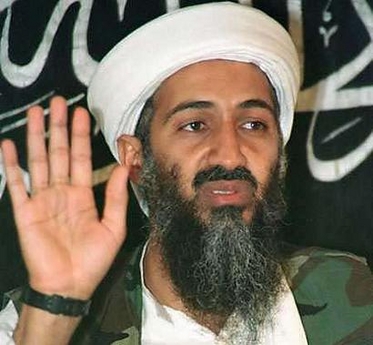
Engdahl also states that naming Al-Queda serves Musharraf and Washington. It increases public fear, revs up the "war on terror," and provides justification for it to continue. It also reinforces the Al-Queda myth as well as "enemy number one" bin Laden, and ignores the evidence that the CIA created both in the 1980s for the war against the Soviets in Afghanistan. It's just as silent on the possibility bin Laden is dead, killed (as Bhutto told David Frost last fall) by Omar Sheikh whom the London Sunday Times called "no ordinary terrorist but a man who has connections that reach high into Pakistan's military and intelligence elite and into the innermost circles" of bin Laden and Al-Queda.

If true, a dead bin Laden disrupts Washington's national security doctrine that needs enemies to scare the public, eliminates "enemy number one" as the main one, and exposes strategically released bin Laden tapes as made-in-Washington frauds. Today, we're told that bin Laden-led Islamic terrorists endanger the West, but at the same time we use them for imperial gain as we did against the Soviets, in the Balkans and now do in Iraq, Iran, Afghanistan and elsewhere. If Al-Queda operatives killed Bhutto, it means Pakistan's ISI and CIA were involved, and what's more likely than that. Forget a lone gunman theory, a lose cannon terrorist or a sole anti-Bhutto assassin. Consider "Cui bono," examine the evidence, and it points to Washington and Islamabad.

Today in Pakistan, intrigue abounds, and the country is destabilized as Michel Chossudovsky observes in his December 30 Global Research article called "The Destabilization of Pakistan." Assassinating Bhutto contributes to it, and Chossudovsky sees a US-sponsored "regime change" ahead. Musharraf is so weak and discredited "continuity under military rule is no long the main thrust of US foreign policy." Musharraf's regime "cannot prevail," and Washington's scheme is "to actively promote the political fragmentation and balkanization of Pakistan as a nation."

From it, a new political leadership will emerge that will be "compliant," have "no commitment to (Pakistan's) national interest," and will be subservient to "US imperial interests, while concurrently....weakening....the central government (and fracturing) Pakistan's fragile federal structure."

It makes perfect sense as part of Washington's broader Middle East-Central Asia agenda. Pakistan is a key frontline state, a "geopolitical hub," with a central role to play in the "Global War on Terrorism." It includes "balkanizing" the country Yugoslavia-style the way it's planned for Iraq, Afghanistan and Iran - a simple divide and conquer strategy. Chossudovsky adds: "Continuity, characterized by the dominant role of the Pakistani military and intelligence (that worked up to now) has been scrapped in favor of political breakup and balkanization." The scheme is to foment "social, ethnic and factional divisions and political fragmentation, including the territorial breakup" of the country.

It's a common US strategy with covert intelligence support, and consider The New York Times article on January 6 called "US Considers New Covert Push Within Pakistan" to exploit Bhutto's death. It states that senior national security advisers (including Dick Cheney, Condoleezza Rice and Joint Chiefs Chairman Admiral Michael Mullen) may "expand the authority of the CIA and the military to conduct far more aggressive covert operations in the tribal areas of Pakistan" against Al-Queda and the Taliban to counteract their efforts and "destabilize the Pakistani government."

The article states that Musharraf and the military are on board, gives the usual boiler plate reasons, but omits what's really at stake even as it admits Musharraf is unpopular and a US intervention could "prompt a powerful popular backlash against" both countries.

Chussodovsky fills in the blanks and explains that US strategy aims to trigger "ethnic and religious strife," abet and finance "secessionist movements while also weakening" Musharraf's government. "The broader objective is to fracture the Nation State....redraw the borders of Iraq, Iran, Syria, Afghanistan and Pakistan" and replace Musharraf in the process. He's unpopular, damaged goods and has to go.

Bhutto was an unwitting part of the scheme but not the way she planned. She thought Washington needed here, and she was right - not as Prime Minister but as a martyr to destabilize the country and break it up if the plan works. It may as internal secessionist elements are strong, especially in energy rich (mostly gas) Balochistan province, and "indications" are they're supported by "Britain and the US." The idea is a "Greater Balochistan" by integrating Baloch areas with those in Iran and southern Afghanistan.

Chossudovsky explains that it was not "accidental that the 2005 National Intelligence Council-CIA report predicted a 'Yugoslav-like fate' for Pakistan" through internally and externally manufactured "economic mismanagment." Remember also that the country split before in 1971 when East Pakistan became Bangladesh following months of civil war and against India that took a million or more lives. Pakistanis may face that prospect again as US plans unfold.

Future Outlook Remains Uncertain

Big questions remain, and key ones are will breakup plans work, who'll emerge with enough popular support to lead it, and will the public go along. They've got no incentive to do it once anger over Bhutto's death subsides, and recent polling data show overwhelming public opposition to US or other foreign intervention that's very much part of the scheme. In the end, their views don't count, and it may happen anyway through political intrigue and Washington-led brute force.

Reports prior to Bhutto's assassination point that way. They suggest US Special and other forces already operate in Pakistan, and head of US Special Operations Command, Admiral Eric Olson, arranged with Musharraf and Pakistan's military last summer and fall to substantially increase their numbers early this year. Involved as well is what The New York Times reported in November that the "US Hopes to Use Pakistani Tribes Against Al Queda" in the country's "frontier areas."

The scheme is similar to the effort in Iraq's al-Anbar province with bribes and weapons to seal a deal apparently now finalized. US Central Command Commander Admiral William Fallon alluded to it in a recent Voice of America interview by saying we're ready to provide "training, assistance and mentoring based on our experience with insurgencies," but he left out the bribing part that's part of these deals.

Where this will lead is speculation, but consider a feature Wall Street Journal January 8 article. It's headlined "Bhutto Killing Roils Province, Spurring Calls to Quit Pakistan" and calls Bhutto's native Sindh province (second largest of Pakistan's four provinces) the "Latest Fault Line In a Fractured Country; Like Occupied Territory."

Mourners filed past Bhutto's grave chanting "We don't want Pakistan," and in the wake of her death "Sindh has been swept by nationalist rage." Many in the province are "calling for outright independence," and support for separation has grown among rank and file PPP members. There's even talk of an "armed insurgency" as anger is directed against neighboring Punjab, the largest province, and home of the military, ISI and government.

The Journal quotes Qadir Magsi, head of the nationalist Sindh Taraqi Passand movement saying...."Bhutto was the last hope (for unity). Now this Pakistan must be broken up." The article continues saying what's happening in Sindh is already in play in the Northwest Frontier province where central government authority withered in recent years. In addition, Pakistan's Army has been embroiled in Baluchistan's insurgency for the past few years adding to overall instability. The theme of the Journal article is that calls for unity are falling on deaf ears, and one PPP veteran sums it up: "What we need is separation."

That suits Bush administration officials fine, they're likely stoking it, and one thing is clear. US forces are in the region to stay, and Washington under any administration (Democrat or Republican) intends to dominate this vital part of the world with its vast energy reserves. The strategy appears similar to the divide and conquer one in Yugoslavia. There it worked, but the Middle East and Central Asia aren't so simple. Stay tuned as events will likely accelerate, the media will highlight them, and it looks like stepped up conflict (and its fallout) is part of the plan.

**
Michel Chossudovsky is a professor of economics at the University of Ottawa.

Chossudovsky has taught as visiting professor at academic institutions in Western Europe, Latin America and Southeast Asia, has acted as economic adviser to governments of developing countries and has worked as a consultant for international organizations including the United Nations Development Programme (UNDP), the African Development Bank, the United Nations African Institute for Economic Development and Planning (AIEDEP), the United Nations Population Fund (UNFPA), the International Labour Organization (ILO), the World Health Organisation (WHO), the United Nations Economic Commission for Latin America and the Caribbean (ECLAC).

Saturday, December 29, 2007

The Paper Trail (Video Updated)

Jeremy Bowden

Police abandoned their security posts shortly before Pakistani opposition leader Benazir Bhutto's assassination Thursday, according to a journalist present at the time, and unanswerable questions remain about the cause of her death, because an autopsy was never performed.

The magic lever...


Washing away the evidence?...


Despite, or because of, finger pointing by the Pakistani public towards Musharraf cohorts (such as Elahi) in a supposed al Qaeda website Ayman al-Zawahiri takes responsibility. Knowing the outpouring of distress by the public all over the country, would this so called popular group admit to such a heinous act so quickly?

Where does the rabbit hole lead?

Was Bhutto talking too much? She questioned the loyalties of the leader of the red mosque, claimed Bin Laden was murdered -- a naive nuisance, she was unrevealing links between CIA/ISI and al Qaeda.

Like the brave Pakistani public questioning their government on 12/27, we too must ask similar questions from our leaders of their role of another date.

An Alternative View

John Chuckman

With the assassination of Ms. Bhutto, we are given to understand, by many newspaper stories and broadcasts, that anti-democratic religious zealots killed Pakistan’s last hope for democracy.

Ms. Bhutto was in many ways an admirable and accomplished leader, a talented woman of courage, but her assassination was a far more complex event than simplistic claims about the dark work of anti-democratic forces.

President Musharraf, for most of the years since the American invasion of Afghanistan, was treated in public as an acceptable ally by the United States. The U.S. desperately needed Pakistan's help in its invasion of Afghanistan, a land about which American politicians had little understanding. To secure that help, America forgave Pakistan’s debts, removed its embargo-bad guy status (for developing atomic weapons in secret), provided large amounts of military assistance, and even managed to swallow its pride over the embarrassing work of Pakistan’s scientific hero, Dr. A. Q. Khan, who supplied atomic-weapons technology to other countries.

Once Americans had mired themselves in Afghanistan – after all the hoopla over a “victory” which amounted to little more than massive bombing while the Northern Alliance warlords did most of the fighting against their rival, the Taleban - the extent of the mess into which they had put themselves slowly dawned. This is particularly true regarding the almost non-existent border between Pakistan and Afghanistan, a huge area that forms almost a de facto third country of Pashtuns.


Intense pressure started being applied to Musharraf to allow American special forces to conduct the kind of brutal and socially-disruptive operations they have maintained in the mountains of Afghanistan. The American approach to rooting out the dispersed Taleban, following its initial “victory,” amounted to going from village to village in the mountains, crashing down doors, using stun grenades, holding men at gunpoint in their own homes, separating the village's women from the men's protection, plus many other unforgivable insults in such a tradition-bound land.

All of this has really been getting them nowhere. In effect, the American government demonstrated it had no idea what to do in Afghanistan after it invaded, only knowing it wanted to get the "bad guys."

Recently, Musharraf's position vis-à-vis the U.S. has undergone a dramatic change. Overnight, the State Department changed him from valiant ally to enemy of democracy, and the American press obliged with the appropriate stories and emphasis.

The reason for this change was simply Musharraf’s refusal to cooperate enough with Bush's secret demands to extend America’s special-forces operations into Pakistan's side of the Pashtun territory: that is, to allow a foreign country into his country to terrorize and insult huge parts of its population. In Bush’s worldview, this only amounted to Pakistan’s fully embracing the “war on terror,” but for many Pakistanis, the “war on terror” is only one more aspect of American interference in their part of the world. The Taleban is viewed by millions there as heroic resisters, standing up to American arrogance, a view not without some substance.

In trying to accommodate Bush, Musharraf launched various showy operations by Pakistan’s army, but his efforts were viewed in Washington as weak. The U.S. kept pushing the limits, trying to force Pakistan to internalize the “war on terror,” and Musharraf resisted. There was a horrific incident in which the U.S. bombed a madrassah (a religious school) in rural Pakistan, succeeding only in killing eighty children, falsely claiming it was Pakistan’s work against a terrorist center.

Musharraf has, rather bravely, opposed America’s demands for a de facto American invasion of his country. He has been remarkably outspoken about American policies on several occasions, not something calculated to endear him to Bush’s gang. So, suddenly he became an undemocratic pariah who needed to be replaced. It was easy enough to exploit public dissatisfaction with a military dictator, even if he was only trying to do his best for his country within some terrible limits.

America gave Ms. Bhutto a blessing and a gentle push, likely a bundle of cash, and undoubtedly the promise of lots of future support, to return home as opposition to Musharraf. One could fairly say that her assassination just proves how little Washington policymakers understand the region. It sent her to her death, desperately hoping against hope to get what it wanted.

Ms. Bhutto was regarded in Washington as more amenable to American demands in Pakistan. She had the double merit of being able to give Pakistan’s government the gloss of democracy while serving key American interests. But it couldn’t be clearer that democracy is not what the U.S. was really concerned with, because Musharraf was just a fine ally so long as he did as he was told.

The truth is that Musharraf has, in opposing America's demands, been a rather brave representative of Pakistan's interests, a patriot in American parlance.

True democracy for a place like Pakistan is a long way off, not because of this or that leader or party, but because of the country's backward economic state. This is even truer for Afghanistan. You cannot instantly create democracies out of lands living in centuries-old economies, burdened with centuries-old customs. The best thing America could have done for this region would have been generous economic assistance, but the U.S. has demonstrated, again and again, it has little genuine interest in that sort of thing. The customs and backwardness of centuries only melt away under the tide of economic development. Democracy follows almost automatically eventually.

The quick fix is what the U.S. demands, a quick fix to its own perceptions of problems under the guise of supporting democracy and opposition to terror, will achieve absolutely nothing over the long term.

Thursday, December 27, 2007

Benazir Bhutto Killed in Blast

Pakistan's ex-PM Benazir Bhutto is killed in a presumed suicide attack, a spokesman for her party says.

Despite what they say 'terrorists' did not kill her - look at the asssigned security resources, was it less than it supposed to have been? Was evidence systematically destroyed? Anyways this blog site will give you a clue to the real perpetrators.

Our thoughts are with her family, God bless.

Tuesday, December 11, 2007

Why the World Needs Democracy in Pakistan: Dictatorship Fuels Extremism

Christian Science Monitor - By Benazir Bhutto

The world has rightly welcomed President Pervez Musharraf's retirement as Army head and announcement that emergency rule will end on Dec. 16. However, a crucial question remains. Is Pakistan heading toward a democratic future?

Parliamentary elections are currently scheduled for Jan. 8. Among many worrying signs of corruption, the election commission is biased and not acting on complaints of fraud.

Yet if credible elections are not held, it will have dangerous consequences for Pakistan and the rest of the world community: Extremism will continue to grow, putting everyone at risk. The world must act to prevent this. It must insist on free and fair elections in Pakistan.

President Musharraf's last term in office demonstrated that dictatorship has fueled extremism. The tribal areas of Pakistan have turned into havens for militants to mount attacks on NATO troops in nearby Afghanistan. Lack of governance has led to the expansion of extremism into settled areas of Pakistan.

Democracy offers the best hope of containing extremism. Yet democracy depends on a fair electoral process and an independent election commission willing and able to implement Pakistan's electoral laws to prevent vote fraud. That is not happening.

"Improvised" voting stations, a pseudonym for ghost polling stations, dot practically every parliamentary constituency. Electoral lists – prepared with financial assistance from USAID – are fatally flawed, with more than 10 million unverified and missing names (clearly enough to "win" or "lose" an election). The sanctity of any future ballot is doubtful against reports that district returning officers have been ordered to disperse 20,000 ballots already marked in favor of pro-government candidates. These bogus votes will be "cast" through the process of double voting in the "improvised" voting stations – in ballot boxes that are translucent rather than transparent.

Mayors continue to control guns and police and government resources and are using them shamelessly to campaign for government candidates. The election commission has asked for "a report" on such malpractices but has taken no concrete efforts to stop them. Politically motivated officials have been placed in charge of the civilian intelligence services and key state posts to manipulate the elections further, although election laws demand that such officials be neutral. An assistant to a former chief minister has been made a returning officer to preside over elections in his area. This complaint is being "looked into" as well, which is simply a fancy way of buying time and doing nothing.

Punjab Province, which elects more than half of Pakistan's parliament, chooses 148 of the members through direct elections, excluding reserved seats for women and minorities. Of these seats, it is believed that 108 have been marked for rigging for government-backed candidates.

By the time all such reports of fraud come in from across the country, the elections will be over.

On top of all this, the media remains gagged, opposition leaders remain imprisoned, voter lists and voting locations have not yet been provided to opposition parties or to the general public in final print or electronic format, and no effort has been made by the pliant electoral commission to regularly consult with political parties on these issues. There is also no plan in place to ensure that votes counted at voting stations will be delivered to local consolidation centers without being manipulated en route. The National Reconciliation Ordinance, which provides for an immediate consolidated count, has been suspended.

Put quite simply, the elections are being stitched up to give the country a continuation of the outgoing government – one that failed to prevent the spread of militancy, extremism, and terrorism. Major terrorist attacks, including the latest plot discovered in Germany this summer, tracked terrorists' footsteps back to Pakistan's northern areas.

Unless there is a change in the status quo, the past will repeat itself. But that change can only come when the world community puts its weight behind fair elections and its faith in the people of Pakistan.

Musharraf sent a delegation to the US last week to talk to the Bush administration and members of Congress about the current situation. This visit was only meantto feign progress and deflect criticism.

Musharraf wants the world to believe that the coming election, though not perfect, will be "good enough for Pakistan" given the country's difficult circumstances. But the current circumstances are of the regime's making. Those in charge can – and must – do much better on this count.

The international community must send a clear message that it will not be an accessory to this coming crime. It must not wait to see if the elections on Jan. 8 are free and fair. It must insist on a minimum set of benchmarks to be met for the election to be recognized as free and fair. If the benchmarks are ignored, the international community must be prepared to signal its displeasure to the Musharraf regime in specific, tangible ways.

Flawed elections will worsen instability in Pakistan as civil society and political parties protest. Imposing international restrictions after the fact will be fruitless and only deepen anti-American sentiment.

At the very least, America can and should prod Musharraf to give Pakistanis an independent election commission, a neutral caretaker administration, and an end to blatant vote manipulation.

America is the world's most powerful democracy. By standing up for democracy at this critical time, Washington can give this nuclear-armed nation an opportunity to reverse the tide of extremism that today threatens not only Pakistan but the larger world community as well.

Friday, November 2, 2007

Benazir Bhutto With Frost

Sir David speaks to former Pakistani PM Benazir Bhutto about her controversial return to Pakistan, who she thinks is behind the deadly bombing of her convoy in Karachi last month, and whether she and Musharraf can forge a powersharing agreement.


Note: Bhutto says Osama bin Laden had been 'murdered'.

Friday, October 19, 2007

Never Give In

A suicide bombing killed at least 124 people and injured more than 320 around midnight Thursday in Karachi, Pakistan, near the motorcade of former Pakistani Prime Minister Benazir Bhutto, according to hospital and police sources.


Bhutto, recently returned to Pakistan, is helped from her vehicle following the bombing.

Bhutto, who returned to the country earlier in the day after eight years of self-imposed exile, was uninjured, as were those with her. She apparently had moved from the roof of her bullet- and blast-proof vehicle to the inside just moments before the blasts.

"I can see body parts strewn all over the road," said CNN's Dan Rivers, who was at the scene. "There are dead bodies everywhere. ... It is a large-scale attack, by the looks of things."

Video footage showed Bhutto her exiting the vehicle after the attack, and she reached her family home safely, her companions said.

Authorities believe the suicide bomber was on foot and threw a grenade to attract attention before setting off the second, major blast, Karachi police chief Azhar Farooqi told CNN. The bomber is believed to have acted alone, he said. Watch witnesses describe what happened »

Police do not think a car bomb was involved, Farooqi said, although nearby cars were burned.

He would not say whom authorities think was behind the bombing, citing the ongoing investigation.

"The truck that Benazir Bhutto was riding on was surrounded by police cars -- so the suicide bomber could not get onto the truck and could not get anywhere near it. So he blew himself up and that has caused many casualties, mostly among the policemen who were riding beside the truck," Tariq Azim Khan, Pakistani information minister, told CNN.

Video footage from the scene showed the street jammed with emergency vehicles, and injured victims writhing in the middle of the road. At least one fire appeared to have been sparked by the blast.

Rivers and his crew were filming the motorcade just before the bombing.

"We remarked on how lax security was around her," Rivers told CNN's Wolf Blitzer after the bombing. "We got within touching distance of her vehicle. There was no security around, nobody stopping vehicles getting close to [the motorcade]."

The windshield of the vehicle in which Bhutto was riding was smashed by the blast, Rivers said, and a vehicle following hers was totally burned out. The scene, he said, was "absolutely horrendous," with blood literally running in streams down the street.

Because the streets were crowded with Bhutto's supporters, ambulances had difficulty reaching the scene. People resorted to driving the injured to hospitals in private cars.

People's Party Leader Qasim Zia, who was riding on Bhutto's truck, told CNN one of his bodyguards was killed and another seriously injured. The injured included at least 20 leaders of the party, he said, and most of those killed were members of security forces or police who were surrounding Bhutto's truck at the time of the bombing.

Had there not been heightened security measures in place, Bhutto could have been killed or injured, he said.

Bhutto, 54, is a polarizing figure in Pakistan because some Muslims in the traditional Muslim nation object to a female leader and because of her pro-Western policies.

The party considers the incident an assassination attempt against Bhutto, officials said.

The bomb detonated as Bhutto's motorcade was nearing the tomb of Muhammad Ali Jinnah, who led Pakistan to independence and championed equal rights for all Pakistani citizens regardless of their religion. Bhutto had planned to stop and pray at the tomb, then deliver a speech to her supporters.

The bombing confirmed fears of instability linked to Bhutto's return, which came after she reached an agreement with Pakistani President Pervez Musharraf allowing her to seek re-election as prime minister. Many were bitterly opposed to that deal.

Musharraf also dropped outstanding corruption charges against Bhutto and a number of other politicians in a "reconciliation ordinance" his office said he signed earlier this month.

The United States was swift to condemn what it called "terrorist attacks in Karachi during peaceful political demonstrations."

"There is no political cause that can justify the murder of innocent people," State Department spokesman Tom Casey said in a written statement. White House spokesman Gordon Johndroe said, "extremists will not be allowed to stop Pakistanis from selecting their representatives through an open and democratic process."

United Nations Secretary-General Ban Ki-moon also issued a statement condemning the bombing.

The terrorist watch group IntelCenter said the death toll from the bombing places it among the top 10 deadliest terror attacks in the past nine years.