
Showing posts with label Pakistan. Show all posts

Tuesday, January 15, 2008

Who Killed Bhutto and Why?

Stephen Lendman

Bhutto's now dead, shot in the back of the head by one or more assassins at close range, plus the effects of a suicide bombing that killed two dozen or more and wounded many others tightly packed around her. It happened in Rawalpindi, "no ordinary city" as Michel Chossudovsky explains. It's the home of Pakistan's military, its CIA-linked ISI, and is the country's de facto seat of power.

Chossudovsky adds: "Ironically Bhutto was assassinated in an urban area tightly controlled and guarded by the military police and the country's elite forces."

Rawalpindi and the country's capital, Islamabad, are sister cities, nine miles apart. They swarm with intelligence operatives including from CIA, and Chussodovsky stresses that Bhutto's assassination "was (no) haphazard event." Blaming Al-Queda misses the point, but that's how these schemes work. They're also clearer when convincing video is broadcast as UK's Channel 4 did on December 30. It debunked the official story and exposed Musharraf as a liar - that Bhutto died from a fractured skull "when she was thrown by the force of the (explosion's) shock wave (and) one of the levers of (her car's) sunroof hit her."

The video contradicts this. It shows a clean-shaven man in sunglasses watching close by with a concealed gun and the suspected suicide bomber behind him dressed in white. The gunman then approaches Bhutto's car and at point blank range fires three shots. Immediately after, the suicide bomber detonates his device, killing and wounding dozens nearby.

The question then is - not who killed her, but who ordered her killed and who profits from it? Musharraf quickly named the usual suspect - Al-Queda but ignored what William Engdahl observed in his January 4 Global Research article called "Bhutto's Assassination: Who Gains?" He notes how well protected political leaders are so it's no simple task killing them. "It requires agencies of professional intelligence training to insure the job is done" right, and no one can reveal who ordered it or the motive.

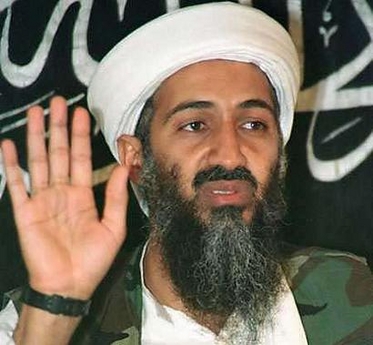
Engdahl also states that naming Al-Queda serves Musharraf and Washington. It increases public fear, revs up the "war on terror," and provides justification for it to continue. It also reinforces the Al-Queda myth as well as "enemy number one" bin Laden, and ignores the evidence that the CIA created both in the 1980s for the war against the Soviets in Afghanistan. It's just as silent on the possibility bin Laden is dead, killed (as Bhutto told David Frost last fall) by Omar Sheikh whom the London Sunday Times called "no ordinary terrorist but a man who has connections that reach high into Pakistan's military and intelligence elite and into the innermost circles" of bin Laden and Al-Queda.

If true, a dead bin Laden disrupts Washington's national security doctrine that needs enemies to scare the public, eliminates "enemy number one" as the main one, and exposes strategically released bin Laden tapes as made-in-Washington frauds. Today, we're told that bin Laden-led Islamic terrorists endanger the West, but at the same time we use them for imperial gain as we did against the Soviets, in the Balkans and now do in Iraq, Iran, Afghanistan and elsewhere. If Al-Queda operatives killed Bhutto, it means Pakistan's ISI and CIA were involved, and what's more likely than that. Forget a lone gunman theory, a lose cannon terrorist or a sole anti-Bhutto assassin. Consider "Cui bono," examine the evidence, and it points to Washington and Islamabad.

Today in Pakistan, intrigue abounds, and the country is destabilized as Michel Chossudovsky observes in his December 30 Global Research article called "The Destabilization of Pakistan." Assassinating Bhutto contributes to it, and Chossudovsky sees a US-sponsored "regime change" ahead. Musharraf is so weak and discredited "continuity under military rule is no long the main thrust of US foreign policy." Musharraf's regime "cannot prevail," and Washington's scheme is "to actively promote the political fragmentation and balkanization of Pakistan as a nation."

From it, a new political leadership will emerge that will be "compliant," have "no commitment to (Pakistan's) national interest," and will be subservient to "US imperial interests, while concurrently....weakening....the central government (and fracturing) Pakistan's fragile federal structure."

It makes perfect sense as part of Washington's broader Middle East-Central Asia agenda. Pakistan is a key frontline state, a "geopolitical hub," with a central role to play in the "Global War on Terrorism." It includes "balkanizing" the country Yugoslavia-style the way it's planned for Iraq, Afghanistan and Iran - a simple divide and conquer strategy. Chossudovsky adds: "Continuity, characterized by the dominant role of the Pakistani military and intelligence (that worked up to now) has been scrapped in favor of political breakup and balkanization." The scheme is to foment "social, ethnic and factional divisions and political fragmentation, including the territorial breakup" of the country.

It's a common US strategy with covert intelligence support, and consider The New York Times article on January 6 called "US Considers New Covert Push Within Pakistan" to exploit Bhutto's death. It states that senior national security advisers (including Dick Cheney, Condoleezza Rice and Joint Chiefs Chairman Admiral Michael Mullen) may "expand the authority of the CIA and the military to conduct far more aggressive covert operations in the tribal areas of Pakistan" against Al-Queda and the Taliban to counteract their efforts and "destabilize the Pakistani government."

The article states that Musharraf and the military are on board, gives the usual boiler plate reasons, but omits what's really at stake even as it admits Musharraf is unpopular and a US intervention could "prompt a powerful popular backlash against" both countries.

Chussodovsky fills in the blanks and explains that US strategy aims to trigger "ethnic and religious strife," abet and finance "secessionist movements while also weakening" Musharraf's government. "The broader objective is to fracture the Nation State....redraw the borders of Iraq, Iran, Syria, Afghanistan and Pakistan" and replace Musharraf in the process. He's unpopular, damaged goods and has to go.

Bhutto was an unwitting part of the scheme but not the way she planned. She thought Washington needed here, and she was right - not as Prime Minister but as a martyr to destabilize the country and break it up if the plan works. It may as internal secessionist elements are strong, especially in energy rich (mostly gas) Balochistan province, and "indications" are they're supported by "Britain and the US." The idea is a "Greater Balochistan" by integrating Baloch areas with those in Iran and southern Afghanistan.

Chossudovsky explains that it was not "accidental that the 2005 National Intelligence Council-CIA report predicted a 'Yugoslav-like fate' for Pakistan" through internally and externally manufactured "economic mismanagment." Remember also that the country split before in 1971 when East Pakistan became Bangladesh following months of civil war and against India that took a million or more lives. Pakistanis may face that prospect again as US plans unfold.

Future Outlook Remains Uncertain

Big questions remain, and key ones are will breakup plans work, who'll emerge with enough popular support to lead it, and will the public go along. They've got no incentive to do it once anger over Bhutto's death subsides, and recent polling data show overwhelming public opposition to US or other foreign intervention that's very much part of the scheme. In the end, their views don't count, and it may happen anyway through political intrigue and Washington-led brute force.

Reports prior to Bhutto's assassination point that way. They suggest US Special and other forces already operate in Pakistan, and head of US Special Operations Command, Admiral Eric Olson, arranged with Musharraf and Pakistan's military last summer and fall to substantially increase their numbers early this year. Involved as well is what The New York Times reported in November that the "US Hopes to Use Pakistani Tribes Against Al Queda" in the country's "frontier areas."

The scheme is similar to the effort in Iraq's al-Anbar province with bribes and weapons to seal a deal apparently now finalized. US Central Command Commander Admiral William Fallon alluded to it in a recent Voice of America interview by saying we're ready to provide "training, assistance and mentoring based on our experience with insurgencies," but he left out the bribing part that's part of these deals.

Where this will lead is speculation, but consider a feature Wall Street Journal January 8 article. It's headlined "Bhutto Killing Roils Province, Spurring Calls to Quit Pakistan" and calls Bhutto's native Sindh province (second largest of Pakistan's four provinces) the "Latest Fault Line In a Fractured Country; Like Occupied Territory."

Mourners filed past Bhutto's grave chanting "We don't want Pakistan," and in the wake of her death "Sindh has been swept by nationalist rage." Many in the province are "calling for outright independence," and support for separation has grown among rank and file PPP members. There's even talk of an "armed insurgency" as anger is directed against neighboring Punjab, the largest province, and home of the military, ISI and government.

The Journal quotes Qadir Magsi, head of the nationalist Sindh Taraqi Passand movement saying...."Bhutto was the last hope (for unity). Now this Pakistan must be broken up." The article continues saying what's happening in Sindh is already in play in the Northwest Frontier province where central government authority withered in recent years. In addition, Pakistan's Army has been embroiled in Baluchistan's insurgency for the past few years adding to overall instability. The theme of the Journal article is that calls for unity are falling on deaf ears, and one PPP veteran sums it up: "What we need is separation."

That suits Bush administration officials fine, they're likely stoking it, and one thing is clear. US forces are in the region to stay, and Washington under any administration (Democrat or Republican) intends to dominate this vital part of the world with its vast energy reserves. The strategy appears similar to the divide and conquer one in Yugoslavia. There it worked, but the Middle East and Central Asia aren't so simple. Stay tuned as events will likely accelerate, the media will highlight them, and it looks like stepped up conflict (and its fallout) is part of the plan.

**
Michel Chossudovsky is a professor of economics at the University of Ottawa.

Chossudovsky has taught as visiting professor at academic institutions in Western Europe, Latin America and Southeast Asia, has acted as economic adviser to governments of developing countries and has worked as a consultant for international organizations including the United Nations Development Programme (UNDP), the African Development Bank, the United Nations African Institute for Economic Development and Planning (AIEDEP), the United Nations Population Fund (UNFPA), the International Labour Organization (ILO), the World Health Organisation (WHO), the United Nations Economic Commission for Latin America and the Caribbean (ECLAC).

Sunday, December 30, 2007

Ron Paul: Don't Get Involved

A voice of reason

Meddling Again?

CFR president wants to be involved

Saturday, December 29, 2007

The Paper Trail (Video Updated)

Jeremy Bowden

Police abandoned their security posts shortly before Pakistani opposition leader Benazir Bhutto's assassination Thursday, according to a journalist present at the time, and unanswerable questions remain about the cause of her death, because an autopsy was never performed.

The magic lever...


Washing away the evidence?...


Despite, or because of, finger pointing by the Pakistani public towards Musharraf cohorts (such as Elahi) in a supposed al Qaeda website Ayman al-Zawahiri takes responsibility. Knowing the outpouring of distress by the public all over the country, would this so called popular group admit to such a heinous act so quickly?

Where does the rabbit hole lead?

Was Bhutto talking too much? She questioned the loyalties of the leader of the red mosque, claimed Bin Laden was murdered -- a naive nuisance, she was unrevealing links between CIA/ISI and al Qaeda.

Like the brave Pakistani public questioning their government on 12/27, we too must ask similar questions from our leaders of their role of another date.

Bhutto: Musharraf 'Responsible'

In an e-mail sent to a confidant in the US two months ago, assassinated Pakistani opposition leader Benazir Bhutto said she would hold the country's current leader Pervez Musharraf "responsible" because his government did not do enough to provide for her security.


"I wld [sic] hold Musharaf [sic] responsible," Bhutto wrote to her US spokesman, Mark Siegel, in the October e-mail, which was reported Thursday afternoon by CNN's Wolf Blitzer. "I have been made to feel insecure by his minions, and there is no way what is happening in terms of stopping me from taking private cars or using tinted windows or giving jammers or four police mobiles to cover all sides cld [sic] happen without him."

Blitzer told viewers he received the e-mail soon after it was sent two months ago, but he agreed not to report on it unless Bhutto was assassinated. "It's a story I was asked to report to the world in -- if Bhutto were killed," he said.

The former Pakistani prime minister was shot twice Thursday just before her assassin detonated a suicide bomb that killed at least 20 more of her supporters.

Appearing on The Situation Room on CNN, Siegel said Bhutto was concerned about her security as soon as she returned from years-long exile in October.

"Benazir was very concerned by the lack of security that she had on her arrival in Karachi on October 18th," Siegel said. "The circumstances around the attempt on the night of the 18th, the morning of the 19th, was very, very suspicious. ... There was no investigation of that horrendous killing which killed 179 people. She had asked that Scotland Yard and the FBI be brought in for forensic help for the investigation. The government of General Musharraf absolutely refused."

Since October, Siegel said, Bhutto received "some police protection," but was denied other security precautions such as jammers to prevent improvised explosive devices or four police escorts to protect her from all sides when she appeared in public.

Mahmud al-Durrani, Pakistan's ambassador to the US, also appeared on Blitzer's program. He said it was "naive" to blame Musharraf's government for the attack.

"Musharraf tried his best, but the circumstances under which she moved, that was a problem," al-Durrani said. "When she was moving almost in a sea of humanity, so this -- this -- no system in the world can protect you against that."

Monday, December 24, 2007

Altaf And His Loyalties (Urdu)

Need I say anymore


Sunday, December 16, 2007

Recap - Musharraf

Greg Palast

It all began with an unpaid electricity bill. In 1998, Pakistan wouldn't pay up millions, and they owed billions, to British and American electricity companies. And for good reason: the contracts called for paying insanely high prices.

It smelled of payola - and ultimately, the government of Pakistan filed charges against power combine executives and canceled the contracts. That's the rule under international law: companies can't collect on contracts they obtained by pay-offs.

But these weren't just any companies. One was a Tony Blair favorite, Britain's National Power. The other was Entergy International, a sudden big-time player in the international power market based out of, oddly, Little Rock, Arkansas. Despite the Clinton Administration's claim to fight foreign corruption, this was an exception. Clinton and Blair voted to cut off Pakistan's funding from the IMF. Pay-up the power pirates, they told Pakistan, or starve.

Why was President Clinton so determined to crush Pakistan because of an unpaid bill to some Little Rock company. This was not just any company. But that wasn't much. More important, Entergy and its partners, the Riady Family of Indonesia had just paid about half a million dollars to Hillary's old Rose Law Firm partner Webster Hubbell. Odd that, hiring Hubbell. Why would Entergy pay big bucks to a Hubbell as a "consultant" when he was on his way to jail for a felony. Hubbell was doing time because he refused to testify against Ms. Rodham.

Did President Clinton know about the payment to Hubbell? Clinton denied it to the press,but under oath, to the FBI, Bill said he, "wouldn't be surprised" if the Riadys told him about the payoff to Hubbell in one of Bill's several private meetings with them in the Oval Office.

Was there a connection between Entergy's kindness to Hillary and her law partner and the power company's extraordinary sway with the Administration? From inside information on energy policies to favor requested of Tony Blair's office by Hillary's office, Entergy could do no wrong. Certainly, their consortium's executives wouldn't have to stand trial in Pakistan.

And Entergy got its money. On December 22, 1998, Pakistan's military, at the direction of General Pervez Musharraf, sent thirty thousand troops into the nation's power stations. At the time, Entergy's partners told me, "A lot changed since the army moved in. Now we have a situation where we can be paid. They've found a way to collect from the man in the street." Yes: at gunpoint, according to Abdul Latif Nizamani, a labor union leader who spoke with me after Musharraf's gang had arrested him.

With Pakistan's army in control of thenation's infrastructure, and acting as guarantor of payment to the US and UK power giants, General Musharraf's final takeover of the entire government nine months later - a "surprise" coup to the Western press - was, a forgone conclusion. And the Clintons, complicit, like Bush today, could say little.

Just months before he left office President Clinton paid a sudden visit to Musharraf. Congressional Democrats were stunned. Musharraf had quickly shown himself to be a Taliban-loving, unbalanced dictator who violated US treaty terms by exploding a nuke and threatening to incinerate our ally India. Notably, the Ambassador with Clinton made payments to the electric companies a top item on his agenda.

Favors done; favors repaid. Nothing new under the sun, but it's a dangerous game, Senator Clinton.

All right, maybe you can say that President Clinton's blessing of the radioactive dictator can't be blamed on Hillary despite the smelly money chain going from Arkansas to Karachi. But, be honest, the lady sure as heck ain't running on her record as a Senator; her whole pitch is, "Re-elect Clinton."

And I'd rather tell you this story before you hear it from President Giuliani.

Nevertheless, let's not lose sight of the current danger. While the Clinton's may have handed us the Lunatic of Lahore, it's George Bush who leaves mints on his pillow. I have no information that Clinton knew of the sales to North Korea. The Bush Administration did and, we discovered at BBC, blocked the CIA investigation that could have exposed it in 2001. And that, Mr. Bush, is a very, very dangerous game. The problem of creating Frankensteins, whether an Osama or a Saddam or a Musharraf, is that these creatures are often known to rise and turn on their creators.

But I'm sure we'll correct the error. Four years ago, as Bush was proclaiming victory over the Butcher of Baghdad, I wrote, "Given our experiences with Saddam and Osama, our monsters tend to get out of control after about 11 years. Therefore, we can expect, in the year 2013, that President Jeb Bush will have to order the 82d Airborne into Pakistan to remove Musharraf, the Killer of Karachi."


Greg Palast is the author of the New York Times bestseller, “Armed Madhouse” (Penguin Paperback 2007). When Palast, an investigator of corporate fraud and racketeering, turned his skills to journalism, he was quickly recognized as, “The most important investigative reporter of our time” [Tribune Magazine] in Britain, where his first reports appeared on BBC television and in the Guardian newspapers

Friday, December 14, 2007

Most Want Musharraf to Quit, Poll Shows

New York Times

By DAVID ROHDE and CARLOTTA GALL

The first comprehensive public opinion poll conducted in Pakistan since President Pervez Musharraf declared a state of emergency last month has found that 67 percent of Pakistanis want him to resign immediately and that 70 percent say his government does not deserve re-election.

The poll suggests that Mr. Musharraf will have to engage in substantial vote rigging to have the government of his choice win national elections on Jan. 8.

The survey also calls into question the view in the United States of Mr. Musharraf as a leader who can effectively rule Pakistan and deliver in the campaign against terrorism. And it suggests that civil unrest could erupt if Mr. Musharraf were to win the election.

The poll was conducted by the International Republican Institute, a nonprofit group based in Washington that is affiliated with the Republican Party and promotes democracy abroad. The results were provided to The New York Times before their release on Thursday.

Pakistan’s two main opposition leaders, Benazir Bhutto and Nawaz Sharif, each a former prime minister, are already accusing Mr. Musharraf of fixing the vote in advance and vowing protests if he prevails.

“If elections are rigged, we are going to need to be in a position like the people of Ukraine were, to protest those elections,” Ms. Bhutto said at a news conference last week. “A plan is under way to rig the elections, and to stop progress towards democracy.”

On Nov. 3, Mr. Musharraf declared a state of emergency, abrogated Pakistan’s Constitution, fired the Supreme Court, blacked out the independent news channels and arrested more than 5,000 of his opponents. Since then, most prisoners have been released and Mr. Musharraf has resigned from his post as army chief, but his actions have “polarized” Pakistani society, according to the poll.

Two-thirds of those surveyed “expressed anger at the current state of affairs, desired change and were anti-Musharraf,” the institute said. And one third “remained supportive of President Musharraf and were positive about the condition of the country.”

An American-backed proposal that Mr. Musharraf form a government with Ms. Bhutto also appears to be deeply unpopular. Sixty percent of Pakistanis polled opposed such a deal, which American officials had hoped would bolster support for Mr. Musharraf.

Instead, 58 percent said they would support a “Grand Opposition Alliance” among Ms. Bhutto, Mr. Sharif and other parties against Mr. Musharraf, a former general who seized power in a 1999 coup. Fifty-six percent said the army, which has intermittently ruled Pakistan since it won independence from Britain 60 years ago, should have no role in civilian government.

If Ms. Bhutto and Mr. Sharif do not form an alliance, the country appears to be headed toward a hung Parliament, according to the poll. Asked which party they would support in elections, 30 percent of those polled said they would support Ms. Bhutto’s party, 25 percent named Mr. Sharif’s and 23 percent favored Mr. Musharraf’s.

The poll was based on the responses of 3,520 randomly selected men and women from across Pakistan, according to the institute. It has a margin of error of plus or minus 1.69 percentage points.

“If they did unite, they would put themselves in a much stronger position,” said Robert Varsalone, the institute’s country director, referring to Ms. Bhutto and Mr. Sharif.

But the two are bitter personal rivals and, according to Pakistani political analysts, unlikely to be able to form a government together. They predicted continued political instability if no party wins the vote decisively, with Mr. Musharraf, Ms. Bhutto and Mr. Sharif all vying to cobble together governing coalitions with smaller parties.

The poll also identified several worrying trends for Mr. Musharraf’s party. Seventy percent of Pakistanis said they felt the country was headed in the wrong direction and 51 percent said their personal economic situation had worsened. And Mr. Sharif, who returned to Pakistan from exile two weeks ago, appears to be drawing center-right voters away from Mr. Musharraf, a key source of his support.

Pakistani and Western observers warn that clear signs already exist that Mr. Musharraf and his supporters are manipulating the election. They fear a repeat of nationwide elections won by Mr. Musharraf’s party in 2002.

“It was Pakistan’s most rigged election,” said Ijaz Gilani, chairman of Gallup Pakistan, an Islamabad-based polling and research firm. “Never in our history have we had so much pre-poll and post-poll rigging.”

The irregularities were numerous, according to the opposition and observers, including education requirements that knocked opposition candidates off the ballot and the severe gerrymandering of districts in favor of Mr. Musharraf’s supporters. Long before the race, Ms. Bhutto and Mr. Sharif had been forced into exile, weakening the ability of their parties to function.

As the race approached, Mr. Musharraf took over much of Mr. Sharif’s party, the Pakistan Muslim League. He also passed a requirement that all candidates have a university degree, a measure that knocked some of Ms. Bhutto’s and Mr. Sharif’s strongest candidates off the ballot.

Ikram Sehgal, a defense analyst and retired army pilot who runs a security company, said government and intelligence officials also engaged in “post-poll rigging,” pressing successful candidates from other parties to defect.

“They would say: ‘You have not paid your taxes, here are the bills. These are the corruption cases against you,’ ” he said.

This year, the country’s election commission, judiciary and local governments are all run by officials loyal to Mr. Musharraf. Analysts say the president has used the state of emergency to create an electoral playing field that favors his candidates, constraining media coverage, public rallies and the length of the campaign.

The dismissal and continued detention of Supreme Court and High Court judges “sent a very strong signal” that election results could not be appealed, according an election observer who spoke on condition of anonymity.

Instead of the standard 60-day campaign, candidates will have only three weeks after emergency rule, which is expected to end this weekend. Restrictions will remain against rallies and processions, which are only permitted in proscribed places.

And Mr. Musharraf has muzzled the country’s news media, barring live coverage of election rallies and popular political talk shows. Under a new ordinance unilaterally enacted by Mr. Musharraf under emergency rule, television journalists face up to three years in jail for broadcasting “anything which defames or brings into ridicule the head of state.”

In a letter to stations on Monday, government officials accused them of airing live telephone calls from the public that contained “baseless propaganda against Pakistan and incite people to violence.” If the practice continued, they said, station owners and journalists could be jailed.

Fears also exist that government resources are being used in favor of election candidates. The nazim, or district mayor, who controls the local government officials running polling stations, can oversee rigging, Mr. Sehgal said. Opposition parties have demanded they be replaced by neutral officials during the election campaign.

Mr. Sehgal also said law enforcement agencies could shutter polling stations where opposition candidates were expected to do well on the pretext that there were disturbances. “The police find out where they could lose a polling station and they close it early,” he said. “And they put the votes of their party in the box.”

And after ballots are cast, there are concerns about how the vote will be tallied, according to the election observer. Political party observers may be barred from election centers where results from across the constituency will be totaled. “It’s a huge deficiency,” he said.

On Wednesday, Aitzaz Ahsan, a top lawyer who has been under house arrest during the state of emergency was imposed, announced that he was pulling out of the election, in deference to the lawyers who have sought a boycott of elections until the former Supreme Court is restored.

He and other lawyers predict the vote will be rigged. Mr. Sehgal estimates that Pervez Elahi, the former chief minister of Punjab Province and the leading candidate from Mr. Musharraf’s party, can secure 100 seats in Punjab by virtue of his control of government machinery there.

Without rigging, he would only get 45 to 50 seats, he said. Mr. Gilani said his polling has shown 20 percent support for Mr. Musharraf’s party after the emergency.

Tuesday, December 11, 2007

Why the World Needs Democracy in Pakistan: Dictatorship Fuels Extremism

Christian Science Monitor - By Benazir Bhutto

The world has rightly welcomed President Pervez Musharraf's retirement as Army head and announcement that emergency rule will end on Dec. 16. However, a crucial question remains. Is Pakistan heading toward a democratic future?

Parliamentary elections are currently scheduled for Jan. 8. Among many worrying signs of corruption, the election commission is biased and not acting on complaints of fraud.

Yet if credible elections are not held, it will have dangerous consequences for Pakistan and the rest of the world community: Extremism will continue to grow, putting everyone at risk. The world must act to prevent this. It must insist on free and fair elections in Pakistan.

President Musharraf's last term in office demonstrated that dictatorship has fueled extremism. The tribal areas of Pakistan have turned into havens for militants to mount attacks on NATO troops in nearby Afghanistan. Lack of governance has led to the expansion of extremism into settled areas of Pakistan.

Democracy offers the best hope of containing extremism. Yet democracy depends on a fair electoral process and an independent election commission willing and able to implement Pakistan's electoral laws to prevent vote fraud. That is not happening.

"Improvised" voting stations, a pseudonym for ghost polling stations, dot practically every parliamentary constituency. Electoral lists – prepared with financial assistance from USAID – are fatally flawed, with more than 10 million unverified and missing names (clearly enough to "win" or "lose" an election). The sanctity of any future ballot is doubtful against reports that district returning officers have been ordered to disperse 20,000 ballots already marked in favor of pro-government candidates. These bogus votes will be "cast" through the process of double voting in the "improvised" voting stations – in ballot boxes that are translucent rather than transparent.

Mayors continue to control guns and police and government resources and are using them shamelessly to campaign for government candidates. The election commission has asked for "a report" on such malpractices but has taken no concrete efforts to stop them. Politically motivated officials have been placed in charge of the civilian intelligence services and key state posts to manipulate the elections further, although election laws demand that such officials be neutral. An assistant to a former chief minister has been made a returning officer to preside over elections in his area. This complaint is being "looked into" as well, which is simply a fancy way of buying time and doing nothing.

Punjab Province, which elects more than half of Pakistan's parliament, chooses 148 of the members through direct elections, excluding reserved seats for women and minorities. Of these seats, it is believed that 108 have been marked for rigging for government-backed candidates.

By the time all such reports of fraud come in from across the country, the elections will be over.

On top of all this, the media remains gagged, opposition leaders remain imprisoned, voter lists and voting locations have not yet been provided to opposition parties or to the general public in final print or electronic format, and no effort has been made by the pliant electoral commission to regularly consult with political parties on these issues. There is also no plan in place to ensure that votes counted at voting stations will be delivered to local consolidation centers without being manipulated en route. The National Reconciliation Ordinance, which provides for an immediate consolidated count, has been suspended.

Put quite simply, the elections are being stitched up to give the country a continuation of the outgoing government – one that failed to prevent the spread of militancy, extremism, and terrorism. Major terrorist attacks, including the latest plot discovered in Germany this summer, tracked terrorists' footsteps back to Pakistan's northern areas.

Unless there is a change in the status quo, the past will repeat itself. But that change can only come when the world community puts its weight behind fair elections and its faith in the people of Pakistan.

Musharraf sent a delegation to the US last week to talk to the Bush administration and members of Congress about the current situation. This visit was only meantto feign progress and deflect criticism.

Musharraf wants the world to believe that the coming election, though not perfect, will be "good enough for Pakistan" given the country's difficult circumstances. But the current circumstances are of the regime's making. Those in charge can – and must – do much better on this count.

The international community must send a clear message that it will not be an accessory to this coming crime. It must not wait to see if the elections on Jan. 8 are free and fair. It must insist on a minimum set of benchmarks to be met for the election to be recognized as free and fair. If the benchmarks are ignored, the international community must be prepared to signal its displeasure to the Musharraf regime in specific, tangible ways.

Flawed elections will worsen instability in Pakistan as civil society and political parties protest. Imposing international restrictions after the fact will be fruitless and only deepen anti-American sentiment.

At the very least, America can and should prod Musharraf to give Pakistanis an independent election commission, a neutral caretaker administration, and an end to blatant vote manipulation.

America is the world's most powerful democracy. By standing up for democracy at this critical time, Washington can give this nuclear-armed nation an opportunity to reverse the tide of extremism that today threatens not only Pakistan but the larger world community as well.

Tuesday, November 13, 2007

Pasha Law - Not

Civilians to be tried in a military court

Thursday, November 8, 2007

Four Charged with Treason

Thursday November 8, 2007
Guardian Unlimited

Four men have been charged with treason by the Pakistani authorities for making anti-government speeches in the southern port city of Karachi, a court official said today.


The treason charges against the three politicians and a union activist, which carry a maximum sentence of death, came in the wake of mounting political unrest since General Pervez Musharraf declared a state of emergency on Saturday and suspended Pakistan's constitution.

The four were arrested on Monday and interrogated by police before being formally charged yesterday, said the court official.

Benazir Bhutto's Pakistan People's party (PPP) today said the number of people arrested since the imposition of emergency rule was now "in the thousands".
A spokesman for the former prime minister said around 800 PPP supporters had been arrested in the central Punjab province.

"They have raided homes of our activists across Punjab throughout the night. The number of people arrested is now in the thousands," a party spokeswoman added.

Ms Bhutto has planned a public meeting in Rawalpindi, a garrison city just south of the capital, Islamabad, tomorrow to protest against emergency rule.

She has also threatened a "long march" from Lahore to Islamabad - two days before the November 15 date by which Gen Musharraf had previously promised to leave the army.

Police have warned the planned rallies are banned, and a clash between them and Ms Bhutto's supporters could dramatically escalate the political crisis.

Ms Bhutto's gambit poses the first significant challenge to Gen Musharraf since he imposed emergency rule.

It also coincided with the first intervention into the crisis by US president George Bush, who yesterday pressed the general to to hold planned elections and to step down from the army.

The American president, who had not contacted Genl Musharraf directly since he established emergency law on Saturday, told a press conference: "You can't be the president [of Pakistan] and the head of the military at the same time. I had a very frank discussion with him."

Mr Bush has faced demands from Democratic congressmen to cut aid to Pakistan.

He has also been under pressure from the US media, which has contrasted his harsh words for the Burmese junta with his soft approach to Gen Musharraf.

But, speaking at a press conference with the French president Niçolas Sarkozy, Mr Bush recounted his conversation with Gen Musharraf: "My message was that we believe strongly in elections, and that you ought to have elections soon, and you need to take off your uniform."

The US deputy secretary of state, John Negroponte, softened Mr Bush's rebuke further with a statement to the House foreign affairs committee in which he disagreed with Gen Musharraf's tactics but described him as "an indispensable ally" in the US battle against terrorism.

Until now protests have been led by lawyers infuriated at the sacking of their chief justice, Iftikhar Muhammad Chaudhry, who remains under house arrest in Islamabad.

Ms Bhutto's newfound steel edge could change the dynamic. She urged supporters to reach Rawalpindi tomorrow "at all costs".

"We can't work for dictatorship. We can work for democracy," she told an Islamabad news conference. "We're talking about the future of Pakistan as a modern nation."

In a possible prelude to the showdown, teargas was used on 400 Bhutto activists outside parliament yesterday, moments after government legislators inside the building had rubber-stamped Gen Musharraf's emergency rule.

The demonstrators retreated through the choking clouds of gas chanting "Benazir! Benazir!" and "Down with the emergency!"

Until yesterday Ms Bhutto had played a careful game, issuing verbal condemnations of Gen Musharraf but refraining from calling her party, which has countrywide support, on to the streets.

Power-sharing talks between the two have spared her party the worst of the government crackdown. While the leaders of virtually every other party have been jailed since Saturday, Ms Bhutto and her top officials have avoided the purge.

Even now she is keeping open the possibility of cohabitation with Gen Musharraf. He could "open the door" again if he "revives the constitution, retires as chief of army staff, and sticks to the schedule of holding elections", she said.

Still, some analysts detected a change. "She has come to the conclusion that if she doesn't put genuine full pressure [on him], Gen Musharraf will not lose his uniform and the political parties have no future, including herself," said Talat Masood, an analyst and retired army general.

"The Americans have also realised that Gen Musharraf has a rapidly diminishing utility. And he's reaching a point where he is more a problem than a solution."

Chaudhry Shujaat Hussain, a senior member of Gen Musharraf's inner circle, told the Guardian he expected the emergency would be lifted in "two to three weeks".

The route for Ms Bhutto's planned "long march" is highly significant. Lahore is the capital of the Punjab, Pakistan's most populous province and the area from which most of the army comes.

A mass road rally into Lahore was a high point of Justice Chaudhry's street campaign against Gen Musharraf last spring. The government promised a harsh reception for the march.

Friday, November 2, 2007

Benazir Bhutto With Frost

Sir David speaks to former Pakistani PM Benazir Bhutto about her controversial return to Pakistan, who she thinks is behind the deadly bombing of her convoy in Karachi last month, and whether she and Musharraf can forge a powersharing agreement.


Note: Bhutto says Osama bin Laden had been 'murdered'.

Friday, October 19, 2007

Never Give In

A suicide bombing killed at least 124 people and injured more than 320 around midnight Thursday in Karachi, Pakistan, near the motorcade of former Pakistani Prime Minister Benazir Bhutto, according to hospital and police sources.


Bhutto, recently returned to Pakistan, is helped from her vehicle following the bombing.

Bhutto, who returned to the country earlier in the day after eight years of self-imposed exile, was uninjured, as were those with her. She apparently had moved from the roof of her bullet- and blast-proof vehicle to the inside just moments before the blasts.

"I can see body parts strewn all over the road," said CNN's Dan Rivers, who was at the scene. "There are dead bodies everywhere. ... It is a large-scale attack, by the looks of things."

Video footage showed Bhutto her exiting the vehicle after the attack, and she reached her family home safely, her companions said.

Authorities believe the suicide bomber was on foot and threw a grenade to attract attention before setting off the second, major blast, Karachi police chief Azhar Farooqi told CNN. The bomber is believed to have acted alone, he said. Watch witnesses describe what happened »

Police do not think a car bomb was involved, Farooqi said, although nearby cars were burned.

He would not say whom authorities think was behind the bombing, citing the ongoing investigation.

"The truck that Benazir Bhutto was riding on was surrounded by police cars -- so the suicide bomber could not get onto the truck and could not get anywhere near it. So he blew himself up and that has caused many casualties, mostly among the policemen who were riding beside the truck," Tariq Azim Khan, Pakistani information minister, told CNN.

Video footage from the scene showed the street jammed with emergency vehicles, and injured victims writhing in the middle of the road. At least one fire appeared to have been sparked by the blast.

Rivers and his crew were filming the motorcade just before the bombing.

"We remarked on how lax security was around her," Rivers told CNN's Wolf Blitzer after the bombing. "We got within touching distance of her vehicle. There was no security around, nobody stopping vehicles getting close to [the motorcade]."

The windshield of the vehicle in which Bhutto was riding was smashed by the blast, Rivers said, and a vehicle following hers was totally burned out. The scene, he said, was "absolutely horrendous," with blood literally running in streams down the street.

Because the streets were crowded with Bhutto's supporters, ambulances had difficulty reaching the scene. People resorted to driving the injured to hospitals in private cars.

People's Party Leader Qasim Zia, who was riding on Bhutto's truck, told CNN one of his bodyguards was killed and another seriously injured. The injured included at least 20 leaders of the party, he said, and most of those killed were members of security forces or police who were surrounding Bhutto's truck at the time of the bombing.

Had there not been heightened security measures in place, Bhutto could have been killed or injured, he said.

Bhutto, 54, is a polarizing figure in Pakistan because some Muslims in the traditional Muslim nation object to a female leader and because of her pro-Western policies.

The party considers the incident an assassination attempt against Bhutto, officials said.

The bomb detonated as Bhutto's motorcade was nearing the tomb of Muhammad Ali Jinnah, who led Pakistan to independence and championed equal rights for all Pakistani citizens regardless of their religion. Bhutto had planned to stop and pray at the tomb, then deliver a speech to her supporters.

The bombing confirmed fears of instability linked to Bhutto's return, which came after she reached an agreement with Pakistani President Pervez Musharraf allowing her to seek re-election as prime minister. Many were bitterly opposed to that deal.

Musharraf also dropped outstanding corruption charges against Bhutto and a number of other politicians in a "reconciliation ordinance" his office said he signed earlier this month.

The United States was swift to condemn what it called "terrorist attacks in Karachi during peaceful political demonstrations."

"There is no political cause that can justify the murder of innocent people," State Department spokesman Tom Casey said in a written statement. White House spokesman Gordon Johndroe said, "extremists will not be allowed to stop Pakistanis from selecting their representatives through an open and democratic process."

United Nations Secretary-General Ban Ki-moon also issued a statement condemning the bombing.

The terrorist watch group IntelCenter said the death toll from the bombing places it among the top 10 deadliest terror attacks in the past nine years.